
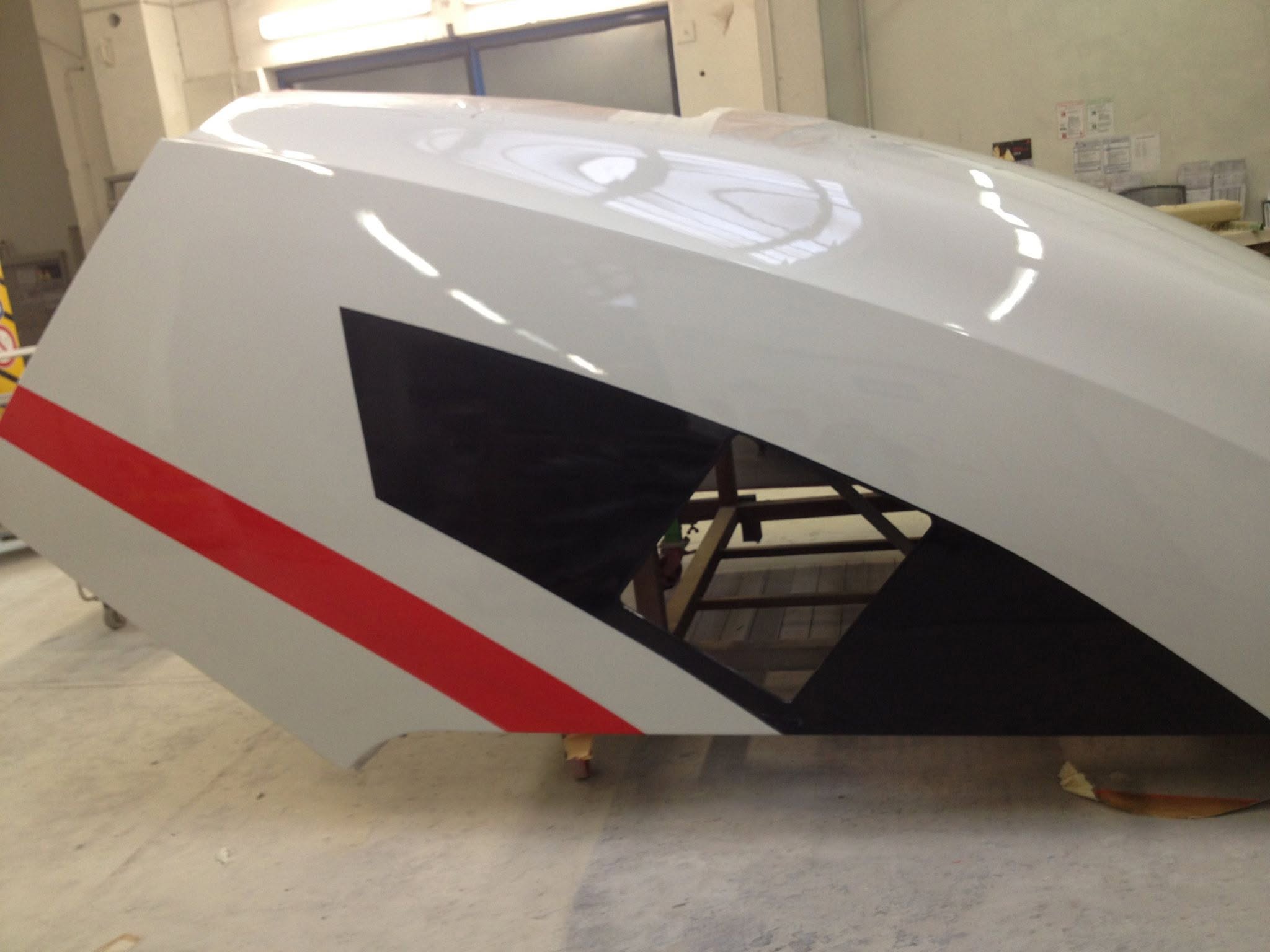
Here, quality is measurable – and documented.
Coating thickness, adhesion, gloss level, colour shade: every coating is tested before it leaves our works. Here we explain how – and to which standards.
What we test on every order.
Our quality management system is certified to ISO 9001:2015. In practice that means defined test steps on every order – with an inspection report for your documentation on request.
| Test | Standard | Method | Why it matters |
|---|---|---|---|
| Coating thickness | DIN EN ISO 2808 | Non-destructive: magnetic induction on steel, eddy current on aluminium | Too thin means a corrosion risk, too thick means a cracking and adhesion risk. What counts is the specified value, not the maximum. |
| Adhesion | DIN EN ISO 2409 | Cross-cut test | Shows whether the coating holds on the substrate over time – the direct measure of surface preparation quality. |
| Gloss level | DIN EN ISO 2813 | Reflectometer measurement | Secures a consistent appearance – important for series parts and visible surfaces. |
| Colour shade | Visual colour assessment | Comparison against colour card or customer sample | Colour control against agreed references and customer-specific tolerances – checked before delivery. |
| Surface cleanliness | DIN EN ISO 8501-1 | Visual assessment after blasting | The cleanliness grade before coating determines the service life of the entire system. |
For DB orders we additionally test and document to the requirements of DBS 918340.
DBS 918340 – our qualification, explained in plain terms.
Deutsche Bahn governs corrosion protection on rail vehicles through its own standards. Anyone coating for the railway or its suppliers needs the matching qualification – we have it.
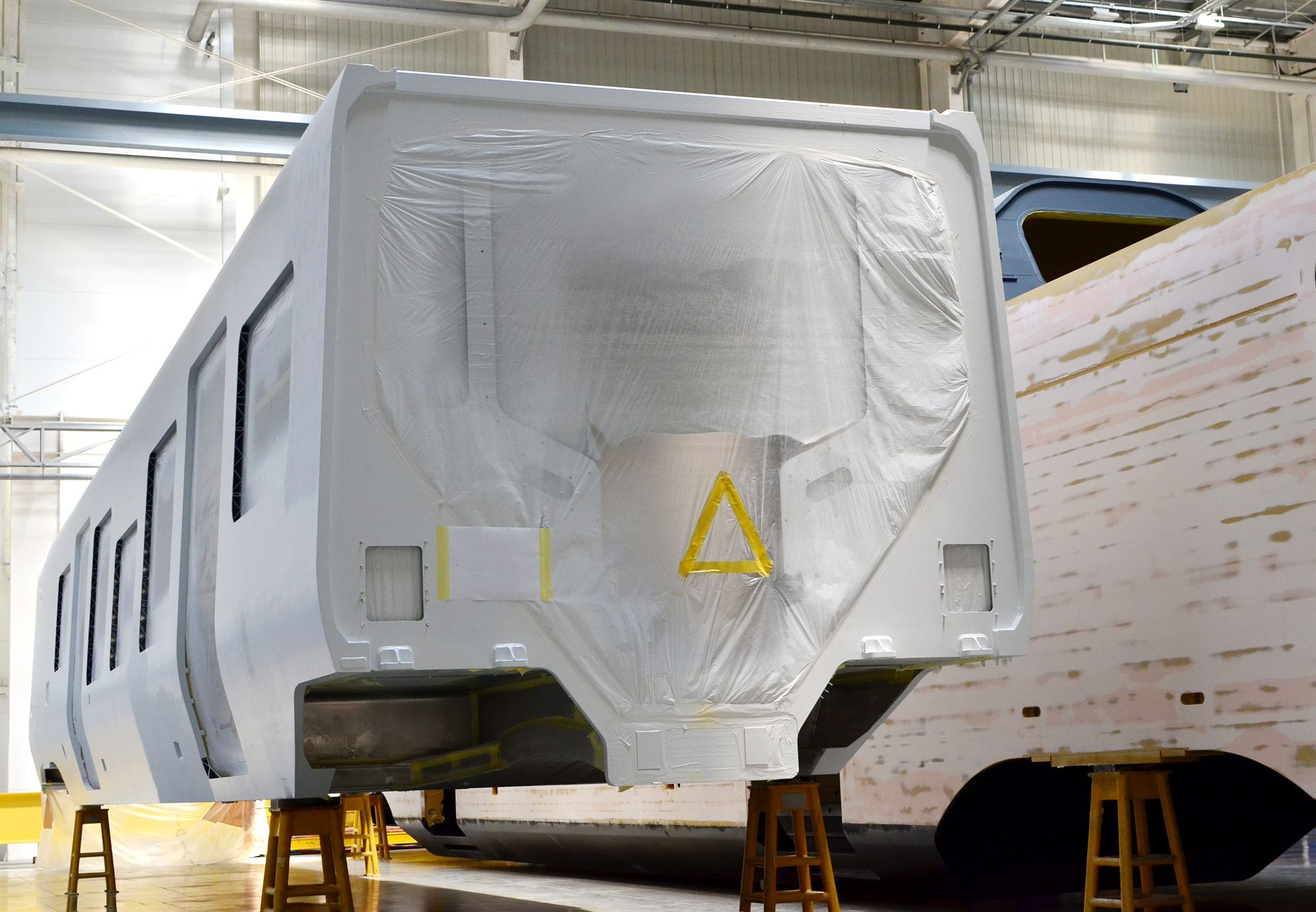 Carbody · preparation to standard
Coating system, surface preparation, verification
DBS 918340 defines corrosion protection systems for rail vehicles: which coating system is permitted on which substrate, how the surface is to be prepared and which tests provide the verification. PICTUM is qualified as a coater in accordance with DBS 918340 – for powder coating on aluminium (interior and exterior) and steel (exterior).
Alongside it we know DBS 918300 (supply conditions for coating materials) from daily work with rail specifications. For OEMs and suppliers that means: you order a component – we deliver the surface to standard, documentation included.
- Qualification
- DBS 918340
- Scope
- Aluminium interior/exterior · steel exterior
- Verification
- Testing + documentation per order
What protection does your component need? Corrosivity categories to DIN EN ISO 12944.
Not every component needs the heaviest system. The decisive factor is the service environment – the standard divides it into categories. Tell us where your component works and we will recommend the matching system.
| Category | Environment | Typical examples |
|---|---|---|
| C1 (very low) | Heated interiors, dry | Offices, retail spaces, interior fit-out |
| C2 (low) | Unheated buildings, rural air with low pollution | Warehouses, sports halls, rural outdoor areas |
| C3 (medium) | Urban and industrial air with moderate pollution | Production areas with humidity, urban exterior components |
| C4 (high) | Industrial atmosphere, moderate coastal proximity | Chemical plants, components along railway lines, swimming pools |
| C5 (very high) | Aggressive industrial and coastal atmosphere | Plants with aggressive atmospheres, near-offshore areas |
The higher the category and the intended durability, the more capable the coating system and coating thickness have to be. That is exactly why we match surface preparation (up to Sa 2½ to ISO 8501-1), coating system and specified coating thickness to one another.
Coating defects – and how we avoid them.
Anyone who knows the defect patterns and their causes keeps them from arising in the first place. The most common defects at a glance – and what our process builds in against them.
| Defect pattern | Typical cause | Our prevention |
|---|---|---|
| Runs and sags | Excessive material application, incorrect application parameters | Defined spray parameters, trained painters, visual inspection while wet |
| Solvent popping / blisters | Trapped solvents – flash-off times disregarded | Flash-off and drying times to the data sheet, no short cuts |
| Orange peel | Poor flow due to incorrect viscosity or spray distance | Material preparation to the manufacturer's specification, gloss level testing |
| Craters and inclusions | Foreign particles, grease or silicone residues on the substrate | Thorough cleaning and degreasing, clean booth air |
| Delamination / flaking | Inadequate surface preparation, wrong primer (critical on aluminium and galvanised steel) | In-house blasting and paint stripping, primer matched to the substrate, cross-cut test as verification |
| Cracking | Incorrect hardener ratio, excessive film thickness, incomplete intermediate drying | Mixing to the data sheet, coating thickness control instead of "more is better" |
Documented in writing – for your supplier approval.
For purchasing and audits: our documentation is ready so that supplier qualification moves quickly.
ISO 9001:2015
Scope: painting work in all wet paint areas, powder coating of metallic substrates, sandblasting. SE-Cert, valid until 01/2027.
Download certificate (PDF)DBS 918340
Powder coating on aluminium (interior/exterior) and steel (exterior) for rail vehicles.
Evidence on request – sent by e-mail at short noticeInspection report per order
Coating thickness, cross-cut test, gloss level, colour shade – documented and enclosed with the delivery note on request.
Request a quoteGot a specification? Send it to us.
We review the applicable standards, the coating system and feasibility – and reply with a specific quotation.