
Surface engineering glossary.
The key technical terms from wet painting, powder coating, blasting and paint stripping – explained briefly, without the jargon.
CCleanliness grade Sa 2½
Surface preparation grade to DIN EN ISO 8501-1: very thorough blast cleaning, a virtually bare metal surface with light shading. The grade most frequently specified in customer specifications – and standard before rail coatings. We blast up to Sa 2½.
CCoating thickness
Measured non-destructively to DIN EN ISO 2808 – by magnetic induction on steel, by eddy current on aluminium. Important: what counts is the specified value. Too thin risks corrosion, too thick risks cracking and adhesion problems.
CCorrosivity category
Classification of the service environment to DIN EN ISO 12944: from C1 (heated interior) to C5 (aggressive industrial and coastal atmosphere). It determines which coating system and which coating thickness your component needs – table on the quality page.
CCross-cut test
Adhesion test to DIN EN ISO 2409: a multi-blade tool cuts a lattice pattern into the coating and the amount that flakes off is assessed. The most honest quick test for surface preparation quality – part of our final inspection.
DDBS 918340
Deutsche Bahn standard for corrosion protection systems on rail vehicles: it governs coating systems, surface preparation and verification. PICTUM is qualified as a coater in accordance with DBS 918340 – details on the quality page.
DDuplex system
Combination of two protection methods, classically galvanising plus coating. The point: the protection periods do not simply add up, they extend one another, because the coating protects the zinc layer – and vice versa.
FFilling
Levelling out unevenness after priming: 1K filler for fine scratches, 2K filler (chemically curing) for load-bearing repairs. Applying it too thickly creates pores – better several thin layers with intermediate sanding.
FFlash-off time
Waiting time between two paint applications during which solvents escape from the fresh film. If it is shortened, the next coat traps the solvents – solvent popping (blisters) results. That is why the rule here is: times to the data sheet, no short cuts.
GGloss level
Reflective behaviour of the surface, measured with a reflectometer to DIN EN ISO 2813 – from dead matt to high gloss. On series parts we check the gloss level so that all parts look of a piece.
MMasking
Protecting adjacent surfaces, fits and functional areas before coating. So that edges stay sharp and the tape adheres reliably, the substrate has to be clean, dry and free of grease – part of our operator self-inspection before every painting job.
NNCS
Natural Colour System – a colour system that orders colours according to human perception (hue, blackness, chromaticness). Alongside RAL, one of the systems we use to supply and assess colour shades.
OOven curing
The final step of powder coating: in the oven the powder melts and cross-links into a closed, mechanically highly resilient film. This is why powder is not suitable for temperature-sensitive components – wet paint is there for those.
PPaint stripping
Removal of existing coatings matched to the substrate – including from corners and cavities that stay out of reach when sanding. We work chemically (gentle on the material, also for aluminium) or thermally (for robust steel parts and thick old coatings).
PPowder coating
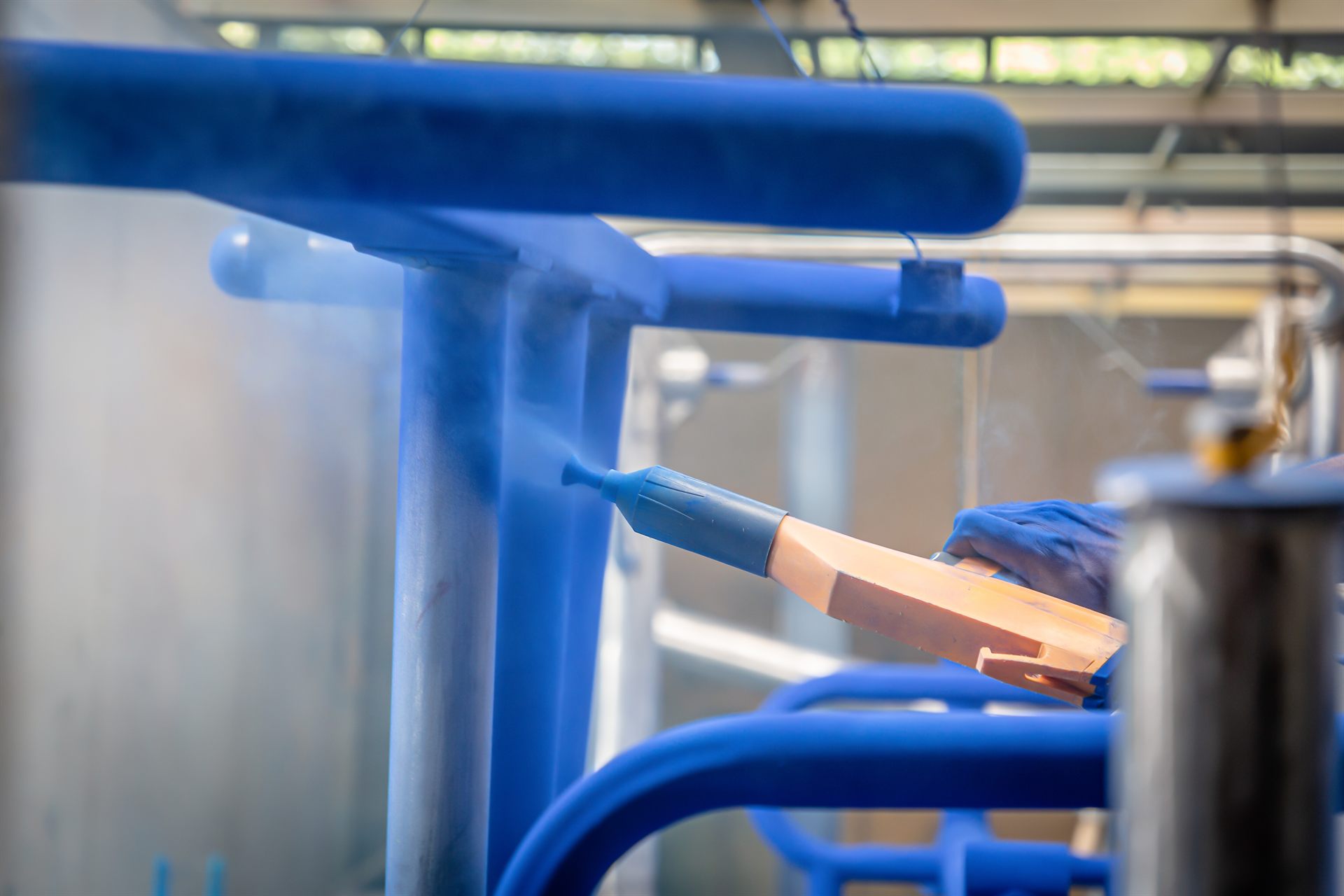
Electrostatic application of powder coating material onto the earthed component, followed by oven curing. Solvent-free, impact- and scratch-resistant, economical for series production – our service page shows plant dimensions and process.
PPrimer
First layer with a dual function: corrosion protection and adhesion promoter to the topcoat. Selecting it to suit the substrate is critical – the wrong primer on aluminium or galvanised steel is one of the most common causes of later delamination.
RRAL
The best-known standardised colour system, launched in 1927 with 40 shades and now offering more than 2,500. The RAL number makes colour communication unambiguous – "RAL 7016" is the same anthracite grey anywhere in the world, with no sample panel needed.
SSolvent popping
Small blisters in the coating caused by trapped solvents – the typical consequence of disregarded flash-off times. More defect patterns with causes and prevention in our defect table.
SSurface preparation
Collective term for everything before coating: cleaning, degreasing, blasting, paint stripping. The invisible half of quality – a coating is only ever as good as the substrate it sits on.
SSweep blasting
Blasting at reduced intensity: the surface is only roughened rather than removed. Ideal for making intact old coatings or galvanised surfaces overcoatable without destroying the protection underneath.
TTopcoat
The uppermost, visible layer of the system – responsible for colour shade, gloss level and weather resistance. Its durability stands or falls with the primer and surface preparation beneath it.
WWet-on-wet
Painting method in which the subsequent coat is applied after a short flash-off without full drying and intermediate sanding. The result: even surfaces with no visible overlaps – standard for multi-layer systems in vehicle manufacturing.
Term not listed – or component in hand?
Just ask. We answer in plain language, with a reference to the standard where one is needed.